
Listening to young voices: Key takeaways from the 2026 iCAN summit


The International Children’s Advisory Network (iCAN) is a global non-profit organization consisting of multiple children’s advisory groups or chapters, that work to include the voices of children and families in healthcare, clinical research and medical innovation. Fortrea has collaborated with iCAN on projects including the co-development of our pediatric assessment form templates and Voice of Patient projects that examine enrolling adolescents into adult clinical trials, perspectives on cell and gene therapy trials and perspectives on data privacy.
The iCAN annual summits provide members with an invaluable opportunity to come together with their peers to learn from one another and to learn from leading professionals in healthcare and research from around the globe. Industry attendees have a unique opportunity at these events to hear directly from those who matter most – those with relevant lived experience.
Members of Fortrea’s Pediatric Leadership team and Patient Recruitment and Engagement team attended this event to further foster our excellent relationship with iCAN and to engage directly with the children, adolescents and their families who were in attendance.
Key takeaways from iCAN summit 2026
Fortrea conducted an interactive workshop at the iCAN annual summit to ask children, adolescents and parents to provide their perspectives on pediatric clinical research and how we can improve the participant experience. The workshop was an opportunity to truly listen to their insights, experiences, preferences, concerns and motivations regarding clinical research.
Negative stigma around clinical research has often been associated with a lack of understanding as to why research is vital and what it involves. It was therefore positive to see when we asked the children and young adults in the room what feelings the words “clinical trial” evoked, that developing new medicines and advancing science formed the main consensus, but that uncertainty, burden and risk are also key observations to be respected. Despite this, over 98% of the group stated they would be open to participating in a clinical trial.
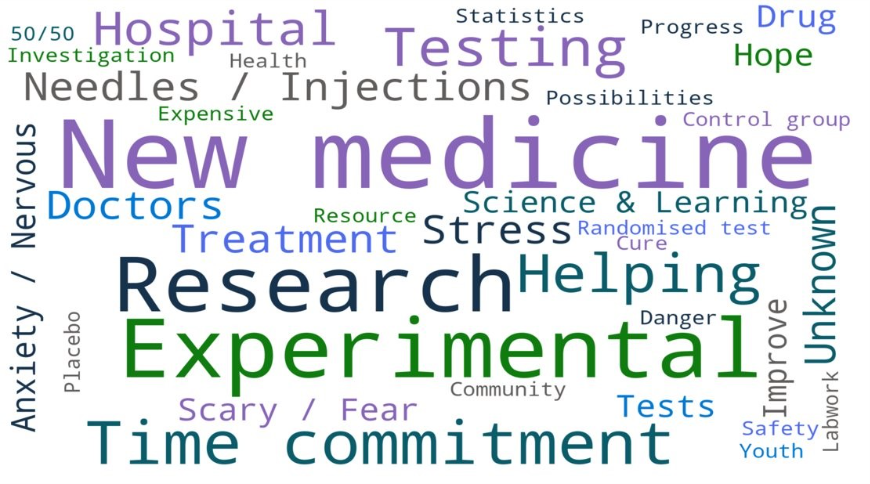
Figure 1. Word map summarizes the responses received when asked about the key themes of a clinical trial
Interactive polls and group work activity allowed the children and young adults to express their preference for the logistical considerations that should be strongly listened to when designing a clinical trial. For example, keeping hospital visits to no more than two hours, visiting frequency to once a month and trial duration to less than 12 months. Additionally, we saw that the use of a wearable device posed no deterrent to participation, whereas the completion of an eDiary did present a barrier to participation. Suggesting this should only be a requirement when absolutely necessary and that the frequency and duration of the interaction need to be kept to a minimum.
A common theme that arose during the session was the need for a more holistic approach to support children and young adults taking part in research, one that included support for their mental well-being as well as their physical health. It was mentioned on several occasions about the importance of a counsellor to talk to, with other creative suggestions including therapy dogs and calm spaces for participants to take a break.
Why listening to young voices matters in clinical research
The session reiterated the importance of listening firsthand to people with lived experience, which is especially important in the younger population, where their potential participation in a clinical trial has unique considerations and requires family support. It is imperative that researchers and those designing clinical trials involve and engage with patients sufficiently and at the earliest possible stage so that protocols can be written with, and not simply for, patients.
Not only will this improve the clinical trial experience for the participants and their families, but it will potentially increase the recruitment and retention rates of the trial itself, bringing better and safer medicines to market sooner.
At Fortrea we are committed to providing research opportunities that are suitable and accessible for all groups, including children and young adults. We do this by listening to their voices. This effort helps us to design studies around the real needs of young participants, resulting in more accessible materials, reduced participant burden, improved recruitment and retention strategies and ultimately more patient-centered, meaningful research.
Learn more about how we can help accelerate your pediatric clinical trial work and subscribe to our newsletter updates for more insights about how study design can be more inclusive for young patients and their families.