Ocular Cell and Gene Therapies
Driving progress in ophthalmology by advancing cell and gene therapies.

We apply forward-looking insights to enable more confident, predictable progress ocular cell and gene therapy programs.
Agile delivery for complex trials
We help biopharma innovators navigate complexity by combining deep therapeutic know-how with global execution to advance ophthalmic innovation and deliver transformative ocular therapies faster.
A focus on patient and caregivers
We design and deliver clinical development programs for ocular cell and gene therapies with a focus on reducing burden, improving access and supporting the real-world needs of those living with inherited retinal disorders.
Applying innovative technology
We leverage advanced data, imaging and analytical platforms to streamline clinical execution and generate high-quality insights for your cell and gene therapy trial.
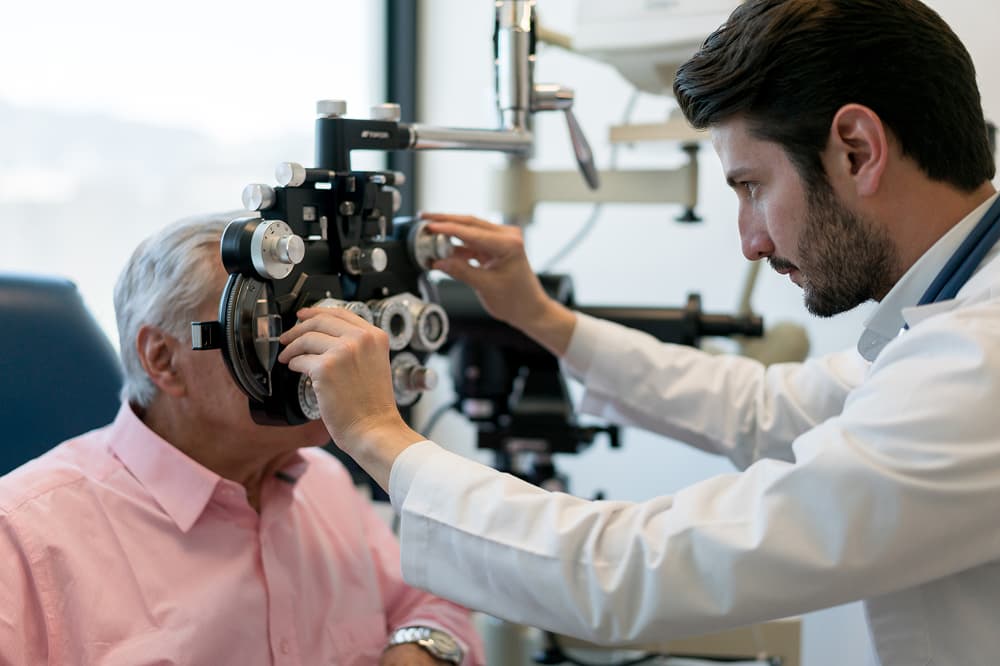
Navigating the complexity of ocular gene therapies
Balancing the need to demonstrate efficacy with the responsibility to protect patient safety is a central challenge in ocular gene therapy development. With one-time treatments and long-term implications, understanding whether a therapy works must be carefully weighed against the potential for unintended effects on already limited vision. We apply rigorous safety monitoring, thoughtful study design and long-term follow-up strategies to generate robust efficacy data to help advance your innovation responsibly and with confidence.
Applying specialized experience
Ocular cell and gene therapies present unique scientific and operational challenges, from precise delivery to delicate retinal structures to the use of specialized endpoints such as advanced imaging and functional vision assessments. Our team at Fortrea offers deep therapeutic experience, leverages cutting-edge vendor relationships and applies operational rigor needed to design and execute studies that address these nuances and generate reliable, high-quality data.


Addressing regulatory and long-term commitments
Advanced ocular therapies require close alignment with evolving regulatory expectations and long-term safety monitoring, often involving extended follow-up over several years. We apply our lessons learned from successful FDA and EMEA audits to develop integrated regulatory strategies and create patient-centric trial approaches that help maintain compliance, optimize the study experience and position your study for advancement toward regulatory approval.
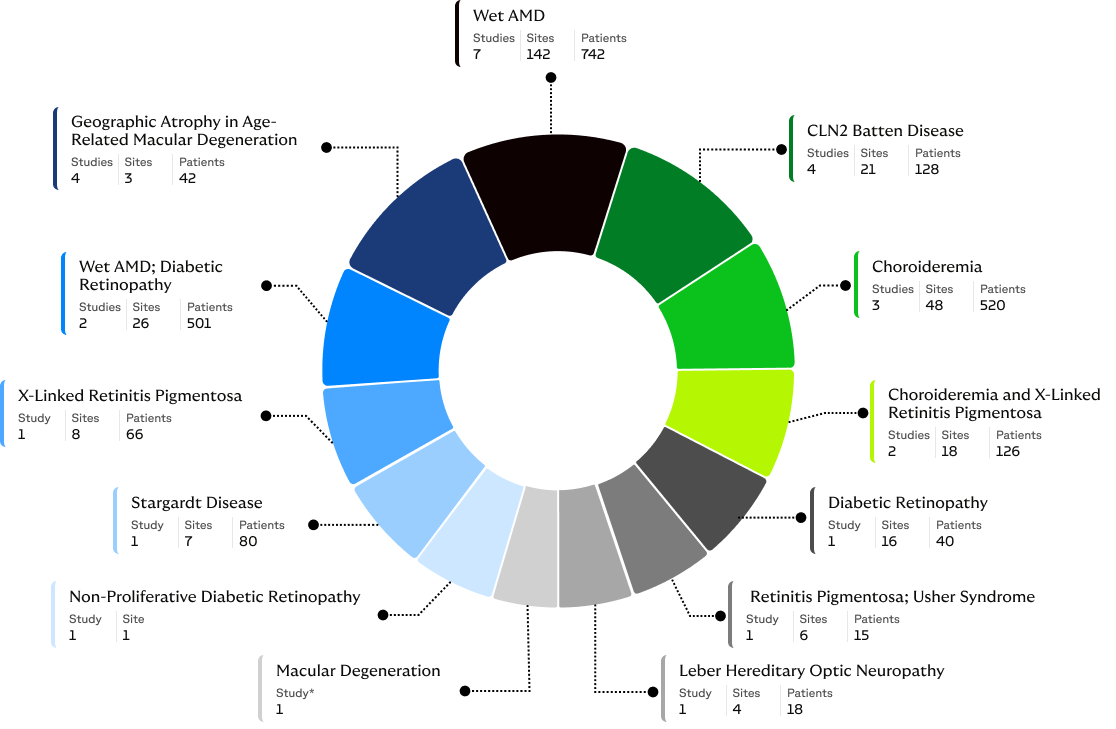
*The data presented range from single service provision to full clinical trial management. Therefore, the number of sites and/or patients may be irrelevant to our services or not disclosed by the sponsor.
Frequently Asked Questions
-
What challenges exist in retinal gene therapy trials?
Retinal gene therapy trials face significant scientific and operational challenges due to the rarity and genetic diversity of inherited retinal diseases (IRDs). Recruiting eligible patients often requires extensive genetic screening and global site coordination, while variability in disease progression can complicate endpoint selection and efficacy interpretation. These studies also rely on specialized surgical delivery techniques, advanced retinal imaging and highly trained investigators, increasing operational complexity. In addition, sponsors must navigate stringent regulatory expectations around vector manufacturing, long-term safety monitoring and durability of treatment effects.
-
How is safety monitored in ocular gene therapy clinical trials?
Safety in ocular gene therapy trials is monitored through comprehensive ophthalmic evaluations, including visual acuity testing, retinal imaging, intraocular pressure assessments and monitoring for inflammation, alongside systemic laboratory testing as needed. Because many therapies use viral vectors such as AAVs, investigators closely track immune responses, retinal complications and potential delayed adverse events. Independent data monitoring committees and centralized image review are commonly used to promote patient safety, particularly during dose-escalation studies and long-term follow-up periods.
-
What endpoints are used in ocular gene therapy studies?
Ocular gene therapy studies typically use a combination of functional, structural and patient-reported endpoints to evaluate treatment benefit. Common functional endpoints include best-corrected visual acuity (BCVA), visual field testing, full-field light sensitivity threshold (FST) and mobility assessments under varying lighting conditions. Structural endpoints often rely on advanced imaging modalities such as optical coherence tomography (OCT) and fundus autofluorescence to assess retinal preservation and anatomical changes over time, while patient-reported outcomes increasingly help measure real-world visual function and quality of life.
-
Why is long-term follow-up important in gene therapy trials?
Long-term follow-up is essential in gene therapy trials because these treatments are designed to produce durable, potentially permanent biological effects after a single administration. Extended monitoring allows sponsors and regulators to evaluate the persistence of therapeutic benefit, durability of transgene expression and the potential for delayed safety events such as inflammation, immune responses or retinal changes. Long-term data also play a critical role in supporting regulatory submissions, commercialization strategies and payer discussions around treatment value and durability.
-
What are the latest advancements in gene therapy for blindness?
Recent advancements in gene therapy for blindness include next-generation AAV vector engineering, less invasive delivery approaches such as intravitreal and suprachoroidal administration and emerging gene editing technologies like CRISPR-based therapies. Researchers are also exploring optogenetics to restore light sensitivity in patients with advanced retinal degeneration, expanding treatment possibilities beyond traditional gene replacement strategies. At the same time, improvements in retinal imaging, biomarker development and AI-driven disease analysis are enhancing patient selection, endpoint sensitivity and overall trial efficiency.
-
What are the risks associated with ocular gene therapy?
The risks associated with ocular gene therapy include inflammation, immune reactions and surgical complications related to subretinal delivery procedures, such as retinal detachment, cataract formation, hemorrhage or elevated intraocular pressure. Additional concerns include vector-related toxicity, off-target biological effects and variability in treatment durability. Because these therapies often involve permanent genetic modification, regulators also require extensive long-term safety monitoring to identify delayed adverse events and support ongoing patient safety.
Explore our therapeutic depth across the ophthalmology spectrum
Ophthalmology
Personalized ophthalmic services to advance your ocular therapies.
Posterior Indications
Advance your ophthalmology study with confidence.
Anterior Indications
Streamlining clinical research through collaboration and insight.
Inherited retinal disorders and rare ocular disease
Delivering high-quality, efficient clinical trials for inherited retinal disorders and rare ocular diseases.