Anterior Indications
Streamlining clinical research through collaboration and insight.

We provide dedicated ophthalmology specialists with decades of proven experience across the full ocular disease spectrum.
Responsive delivery for complex trials
We help biopharma innovators navigate complexity as we combine deep therapeutic know-how with global execution to advance ophthalmic innovation and deliver transformative ocular therapies for anterior indications.
Operational excellence in anterior segment disease trials
We emphasize inspection readiness, data integrity and proactive risk mitigation to enable a quality-driven culture that helps advance your unique ophthalmology trial.
Advanced data experience
Our ophthalmology specialists handle complex assessments for anterior indications by leveraging established vendor collaborations and developing a robust safety infrastructure for inspection-ready data.
Responsive, patient-centric trial design
Anterior segment conditions such as dry eye, glaucoma, refractive errors and blepharitis can significantly impact quality of life, often requiring frequent assessments and long-term management. We help design ophthalmology trials that minimize patient burden as we align protocols with real-world patient needs in visually impaired populations, deliver higher enrollment and help improve engagement, compliance and outcomes.


An agile CRO approach to ophthalmology studies
The variability across anterior eye diseases, spanning chronic, high-prevalence conditions to emerging innovative therapies, including cell and gene treatments, demands agile and adaptive clinical strategies. Our responsive, high-touch service model combines decades of experience from 1400+ global ophthalmology-experienced staff to drive operational excellence, navigate evolving treatment paradigms and deliver thoughtful solutions.
Global capabilities and specialized experience
Successful anterior indication ophthalmology trials depend on access to experienced investigators and high-performing sites. We leverage our global network of ophthalmology specialists to support faster site activation, improve patient recruitment and promote consistent study delivery across regions to execute your trials efficiently and at scale.

A focus on anterior indications
Dry eye disease
To support dry eye disease trials, we leverage lessons from recent successful studies to overcome challenges such as placebo effect and variability in diagnostic criteria. Our patient-centric approach focuses on optimizing recruitment and retention through tailored protocols and burden-reduction strategies. With access to IRIS® registry data and collaborations with ocular imaging vendors, we can deliver high-quality endpoints and help accelerate timelines.
Blepharitis
Blepharitis trials must contend with symptom variability and comorbid ocular surface conditions that can complicate endpoints. We apply our experience spanning protocol design, vendor management for imaging and visual acuity, along with patient engagement strategies to promote smoother trial execution.
Glaucoma
Glaucoma trials are challenged by slow disease progression, variable measurements and patient retention over long studies. Our intelligent trial design helps optimize protocols, standardize assessments and reduce patient burden to keep your trial on track.
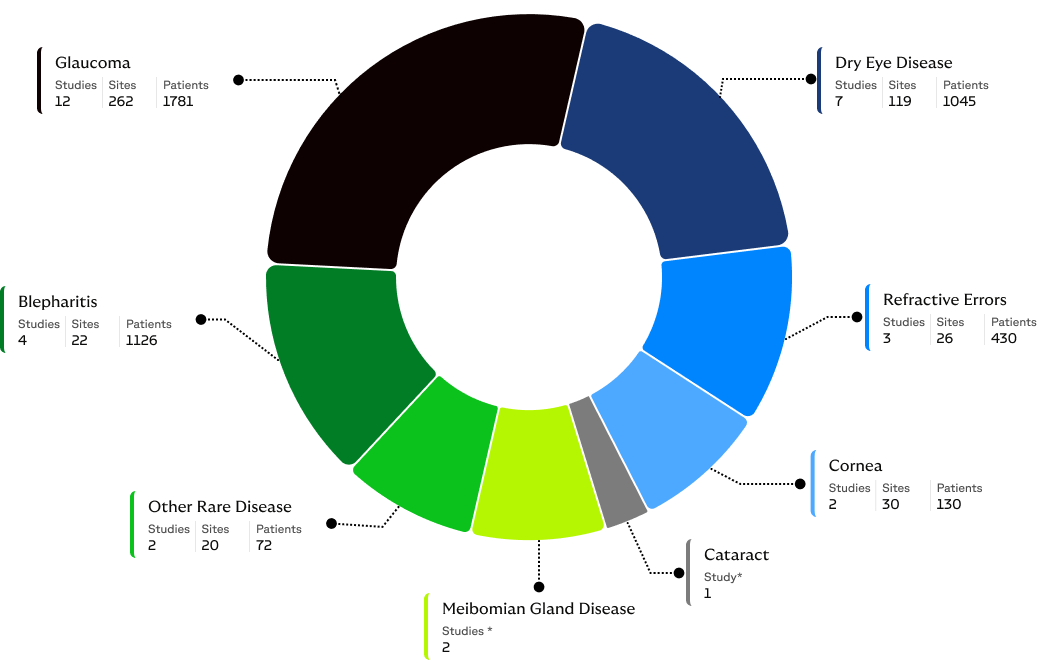
*The data presented range from single service provision to full clinical trial management. Therefore, the number of sites and/or patients may be irrelevant to our services or not disclosed by the sponsor.

Frequently Asked Questions
-
What are the latest advancements in dry eye treatment devices?
Recent advancements in dry eye treatment devices include thermal pulsation systems for meibomian gland dysfunction, intense pulsed light (IPL) therapies, neurostimulation devices that promote natural tear production and wearable technologies designed to improve ocular surface hydration. Device innovation is increasingly focused on personalized treatment approaches, improved patient comfort and minimally invasive therapies that address both the inflammatory and evaporative components of dry eye disease. Advances in diagnostic imaging and tear film analysis are also helping clinicians better identify disease subtypes and optimize treatment selection.
-
What are common endpoints in anterior segment ophthalmology clinical trials?
Anterior segment ophthalmology clinical trials commonly use a combination of objective signs and patient-reported symptom endpoints to evaluate treatment efficacy. Frequently used endpoints include corneal staining scores, tear break-up time (TBUT), Schirmer testing, intraocular pressure measurements and visual acuity assessments. Symptom-based measures such as ocular discomfort, dryness severity, burning and quality-of-life questionnaires are also critical, particularly in dry eye disease studies where symptom variability can significantly impact clinical outcomes and regulatory evaluation.
-
What are the key considerations in dry eye disease clinical trials?
Dry eye disease clinical trials require careful attention to patient selection, endpoint sensitivity and placebo response management due to the multifactorial and highly variable nature of the disease. Investigators must account for fluctuations in symptoms, seasonal influences, concomitant medication use and differences between signs and patient-reported symptoms, which may not always correlate. Successful trials often depend on well-defined inclusion criteria, standardized assessment procedures, controlled adverse environments when appropriate and thoughtful endpoint strategies that align with regulatory expectations and clinically meaningful outcomes.
-
What challenges are associated with glaucoma clinical trials?
Glaucoma clinical trials present several challenges related to slow disease progression, patient adherence and the need for long study durations to demonstrate meaningful outcomes. Intraocular pressure reduction remains the primary regulatory endpoint, but variability in measurements, diurnal fluctuations and background medication use can complicate efficacy assessments. Recruiting appropriate patients, maintaining long-term compliance and detecting structural or functional progression through imaging and visual field testing also require careful study design, experienced investigators and robust monitoring strategies to generate reliable data.
Explore our therapeutic depth across the ophthalmology spectrum
Ophthalmology
Personalized ophthalmic services to advance your ocular therapies.
Posterior Indications
Advance your ophthalmology study with confidence.
Inherited retinal disorders and rare ocular disease
Delivering high-quality, efficient clinical trials for inherited retinal disorders and rare ocular diseases.
Ocular Cell and Gene Therapies
Driving progress in ophthalmology by advancing cell and gene therapies.